Materials
Custom kraft boxes: how they print and when to pick white instead
Custom kraft boxes are boxes made from unbleached brown board and printed with your brand. They recycle like any paper box and look natural without you having to say so. The trade-off is color: every ink sits on brown, so it prints darker and duller than it looks on screen.
If your logo is one or two strong colors, kraft is an easy choice. If your brand depends on a pale pink, a bright yellow or a full-color photo, read the section on print before you order.
By Talha LoneUpdated
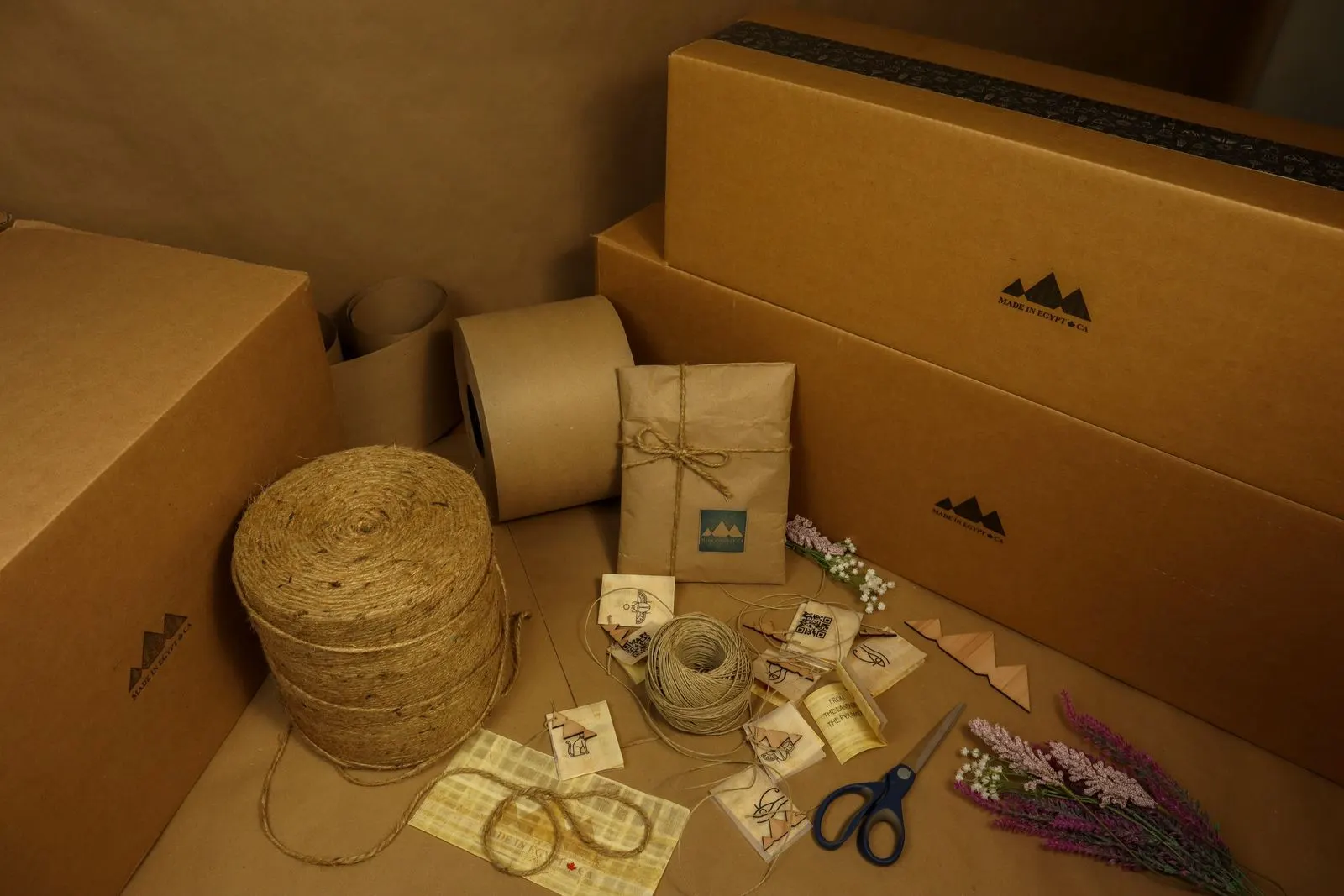
What a kraft box actually is
Kraft is a type of paper, not a style of box. The name comes from the kraft pulping process, which cooks wood chips in chemicals to separate out the long, strong fibers. Most paper in the US starts this way. The difference is what happens next: white board gets bleached, kraft board doesn't. It keeps its brown color and its visible fiber.
So a kraft paper box can be almost any shape of box. A tuck-end carton, a mailer, a sleeve and tray, a lid and base. What they share is the brown surface you print on.
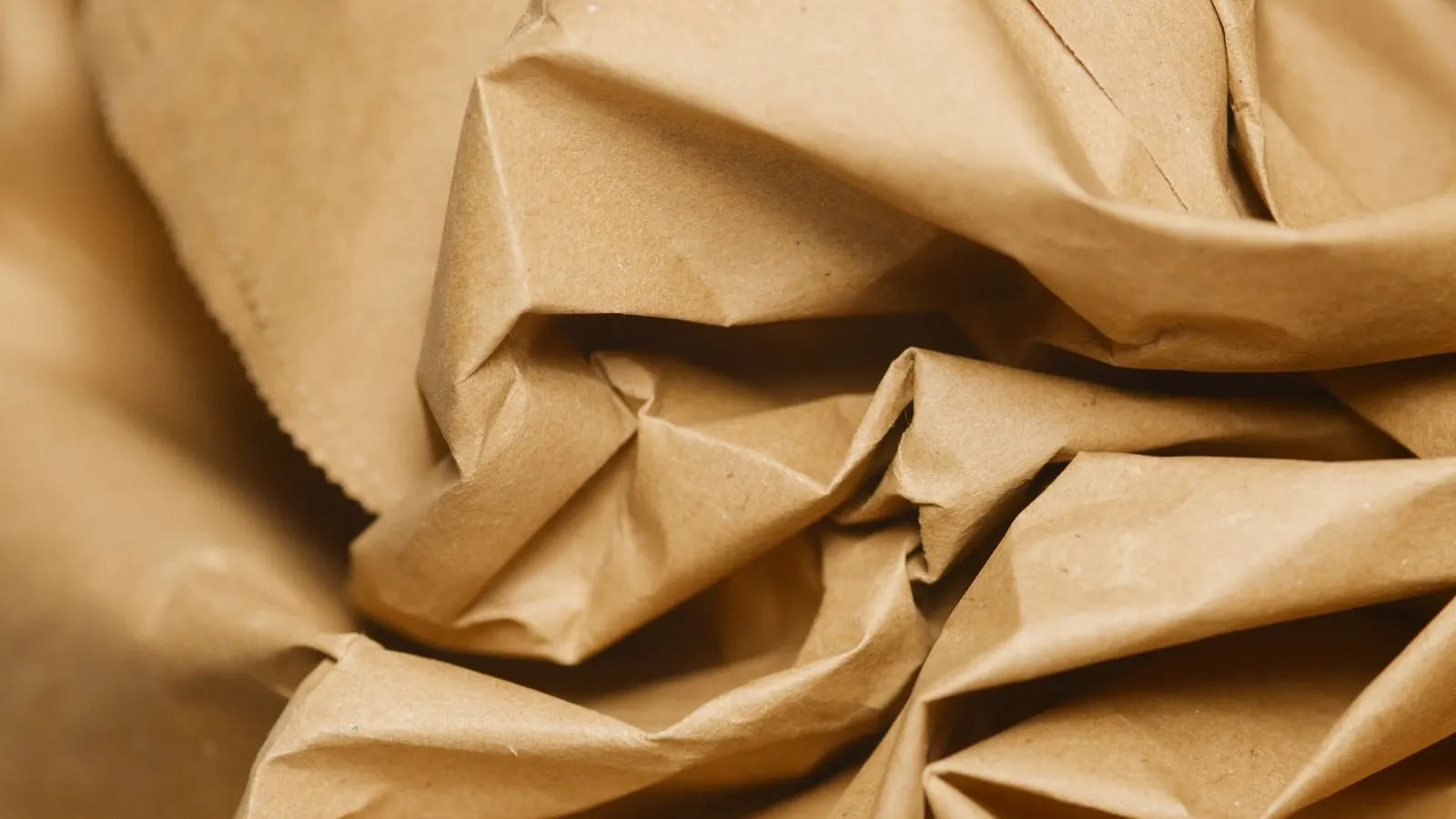
Two kinds of kraft board show up in custom packaging, and they do different jobs:
- Kraft paperboard. A single thick sheet, used for folding cartons like kraft soap boxes, candle boxes and tea boxes. Light, cheap to ship flat, and fine on a shelf. Too thin to go through the mail on its own.
- Kraft corrugated. Two kraft sheets with a fluted layer in between. That wavy middle is what lets a mailer box survive a delivery truck. Use it when the box ships by itself.
If you're not sure which one you need, the question is simple. Does the box go in the mail without another box around it? Then corrugated. Does it sit on a shelf or inside a shipper? Then paperboard. Our materials overview goes through all four boards we use side by side.
How print looks on kraft board
Printing on kraft paper works differently because ink is slightly see-through. On white board, the white shows through and keeps colors bright. On kraft, the brown shows through instead, so every color shifts darker and warmer. That's why a printed kraft box rarely matches the on-screen mockup exactly.
Standard printing has no white ink, either. Anything white in your artwork prints as bare kraft, which means a white logo simply disappears. Some jobs get around this with an extra layer of white printed underneath the colors. It works, but it adds a pass on press and it never quite matches white board.
| Ink color | On kraft | Verdict |
|---|---|---|
| Black | Crisp and high contrast | Best choice |
| Dark green, navy, deep red | Slightly darker, still clean | Works well |
| Mid orange, mid blue | Noticeably muddier | Test with a proof |
| Pastels and light grey | Close to invisible | Avoid |
| White | Doesn't print without a white underlay | Avoid, or budget for underlay |
| Full-color photos | Flat and brownish | Use white board instead |
The practical rule: printed kraft boxes look best with one or two strong ink colors and plenty of bare board left showing. The brown is part of the design, so plan for it instead of fighting it. Send your artwork early and your specialist will flag anything that won't hold up, before the digital proof.
Finishes that work on kraft (and ones that don't)
Kraft board is usually uncoated and a little rough, so some finishes land better than others.
- Foil stamping. Gold, copper and black foil stand out sharply against brown, and foil doesn't depend on the board color the way ink does.
- Debossing. A logo pressed into the board. Quiet, needs no ink, and it suits the look of kraft.
- Embossing. Works, though the raised edge is softer on kraft's fibers than on smooth white board.
- Aqueous coating. A water-based protective layer that keeps the surface from scuffing. It recycles with the box, and we put it on every box by default.
- Spot UV. Less crisp than on coated board, because rough kraft soaks some of it up. Keep it to bold shapes.
- Soft-touch lamination. Technically possible, but it adds a plastic film. That undoes most of the reason people pick kraft.
Most kraft boxes need one finish, not three. Foil or a deboss on the logo is usually enough.
Box styles you can get in kraft
Because kraft is a board and not a style, the structure comes down to what you're packing and how it travels. The common ones:
- Tuck-end cartons. The everyday retail box: soap, candles, tea, supplements. Ships flat and folds in seconds.
- Kraft mailer boxes. Corrugated, self-locking, and strong enough to go in the mail with nothing around them. The usual choice for e-commerce and subscriptions.
- Kraft boxes with lids. A separate lid and base. Most kraft gift boxes are built this way. Good for sets and anything someone might keep.
- Sleeve and tray. A tray that slides out of an outer sleeve. The sleeve carries the print; the tray can stay plain.
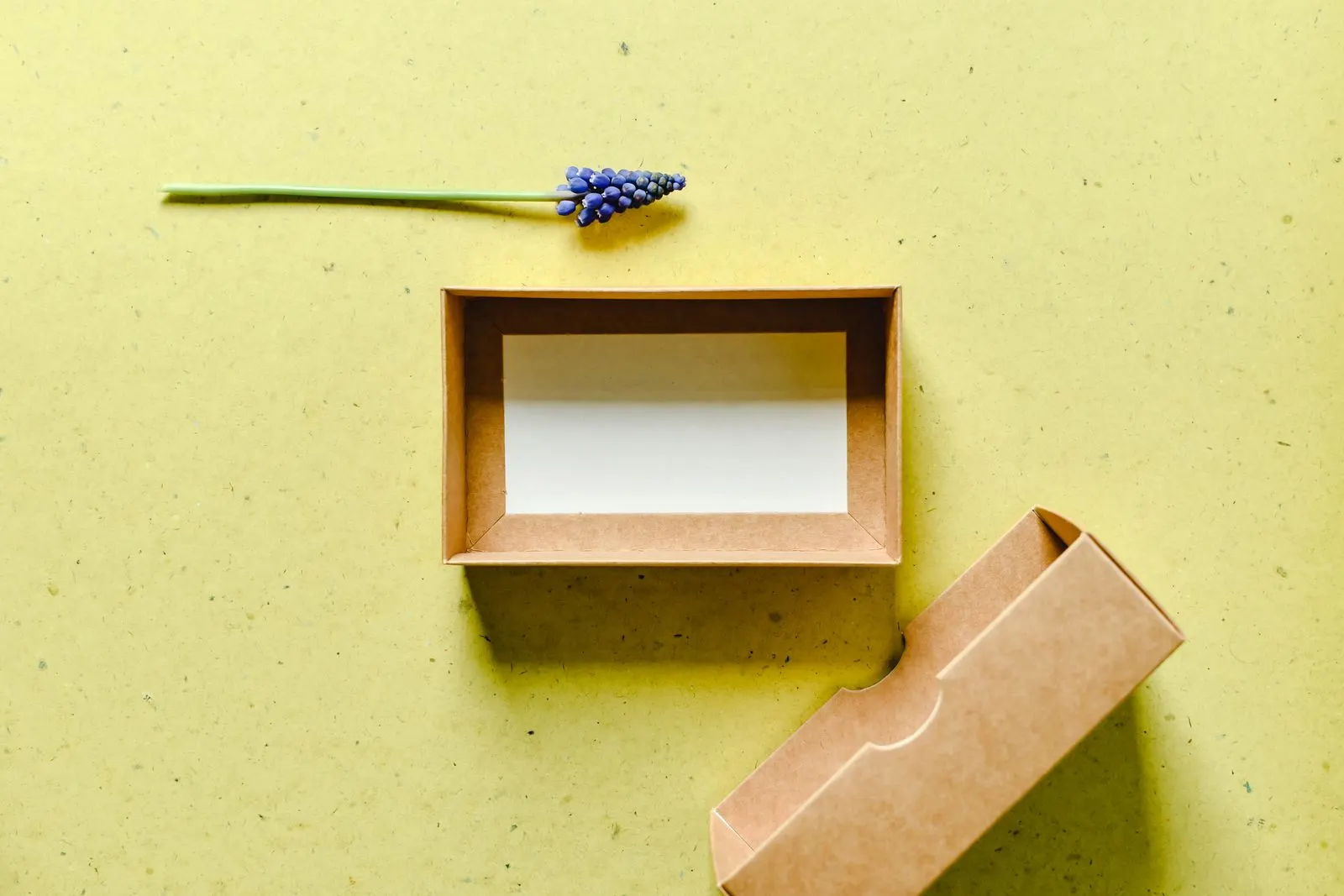
Every one of these gets drawn around your product, not picked from a size chart. That's where the dieline comes in: the flat drawing that shows where the box is cut, folded and glued. Structural design is free with us, so you don't pay for the drawing until you order boxes. You can browse our kraft boxes to see which styles we make in kraft now.
Are kraft boxes recyclable?
Yes. A plain or printed kraft box goes in the curbside recycling bin with other paper and cardboard. Paper and paperboard already have the highest recycling rate of any material in US household waste: 68.2% in 2018, according to the EPA's paper and paperboard data.
What can stop a kraft box from recycling cleanly is what you add to it. Lamination, plastic window film and some foils bring in a second material. Our paper-first materials are 100% recyclable; if plastic-free matters to you, skip soft-touch and window film, and use a die-cut hole instead of a clear window.
Kraft being brown doesn't make it recycled, by the way. Plenty of kraft is made from virgin fiber, and plenty of white board contains recycled fiber. If you want a certified source for the wood, look for the FSC label, not the color.
How ordering custom kraft boxes works
The process is the same as for any custom box. It's covered step by step in how it works, but in short:
- Minimum order: 50 units per design. Enough to test a box with real customers before a bigger run.
- Structural design: $0. We draw the dieline around your product.
- Proof: you place your artwork on the dieline, we check bleed, folds and barcodes, then send a digital proof.
- Production: 10–12 days on most orders, counted from proof approval. Shipping time is on top.
Send the inside dimensions of your product (length, width, depth) or a photo of it on a ruler. That's enough for a quote. If you're not sure which side is which, how to measure a box gets the order right before you send it.
When kraft is the wrong choice
Kraft isn't the better board, just a different one. Pick white paperboard instead if:
- Your brand color is light or bright. Pastel pink on kraft reads as beige.
- The box carries a full-color photo of the product.
- You need exact color matching across a range of products.
- The product is premium in a polished, glossy way. Kraft reads as natural and handmade, which isn't the same thing.
And sometimes we're the wrong supplier. If you need fewer than 50 boxes, a stock kraft box with a printed sticker will cost you less. If you need boxes next week, buy stock now and switch to custom for the next run. And if you want plain brown boxes with nothing printed on them, a stock box supplier is cheaper and faster. Custom is worth it once the box carries your brand.
Still deciding between styles? The Foldwell homepage has a quick picker that matches box type to how your product sells, and the packaging blog covers materials and finishes in more depth.
Frequently asked questions
What is a kraft box?
A box made from kraft board: paperboard or corrugated that hasn't been bleached, so it keeps its natural brown color. Kraft describes the material, not the shape, so tuck cartons, mailers and gift boxes can all be kraft boxes.
Can you print in color on kraft boxes?
Yes, but colors print darker and warmer because the brown board shows through the ink. Black and dark colors look best. Pastels and white disappear unless a white layer is printed underneath first.
Are kraft boxes stronger than white boxes?
Kraft fiber is strong, but box strength mostly comes from the board type and thickness. A kraft paperboard carton is no stronger than a white one of the same thickness. For shipping, choose corrugated, whichever color it is.
Are custom kraft boxes recyclable?
Yes, a kraft box goes in curbside recycling with other paper and cardboard. Lamination and plastic window film add a second material, so skip them if you want the box fully plastic-free.
What is the minimum order for custom kraft boxes?
50 units per design. Production takes 10–12 days on most orders, counted from proof approval, with shipping time on top.
Is kraft paper food safe?
Kraft board can be made for food contact, but not all of it is. In the US, paper that touches food falls under FDA rules such as 21 CFR 176.170. If the box touches the food directly, tell your specialist so the right board and inks get specified.